A Wallace Stories Guide
What Good Disability Representation Looks Like in Children's Books
Good disability representation makes room for the whole child. A wheelchair, hearing aid, leg brace, AAC device, diagnosis, or medical experience may be an important part of their life. It is only one part of their story. They can go to school, explore a new planet, visit the hospital, or follow a talking fox into the woods. What matters is that the story feels true to them.
What good representation makes room for
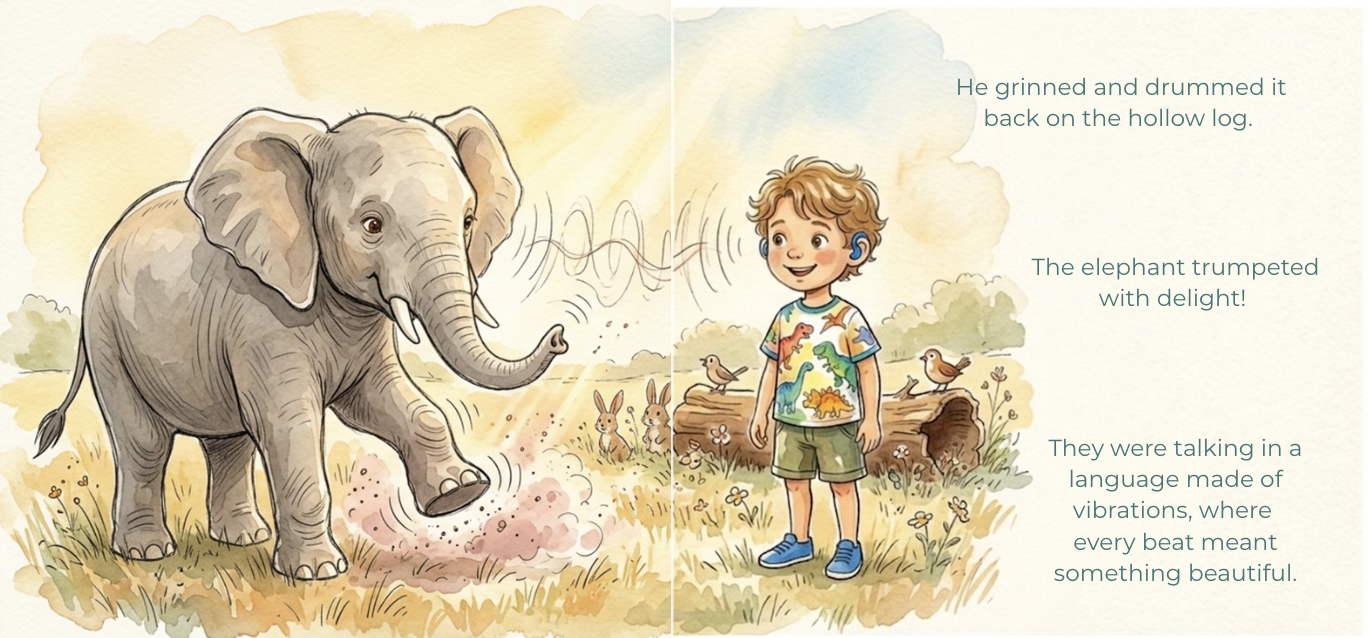
Good disability representation begins with the child as a whole person. Their disability can be visible in every illustration, become part of the plot, or shape a story told entirely through metaphor. A wheelchair, hearing aid, leg brace, AAC device, diagnosis, or medical procedure may shape the story, but it does not define the whole child.
The book might tell the story of an EEG or hospital stay. It might show a child going to school, spending a day with Grandpa, or exploring another planet. The child should not need to explain or overcome a part of themselves before the story can belong to them.
The family shapes the details, language, and meaning. Good representation feels specific enough to recognize and spacious enough for the child to have a full life on the page.
What to look for in the story
Why this became part of our mission
When we started Wallace Stories, I was thinking about the stories families want to keep. Their heritage. Their memories. The people they love.
Then I began looking more closely at disability representation in children’s books. About one in six children ages 3 through 17 in the United States has one or more developmental disabilities. Of the more than 3,600 books for children and teens published in 2024 and received by the Cooperative Children’s Book Center at the University of Wisconsin-Madison, 7 percent featured a primary or significant secondary character with a disability, unchanged from 2023. Those figures measure different things, but together they helped me understand why so many families have to search so hard for a story that feels specific to their child.
Conversations with families made that gap personal. And working on The Smallest Spark made the mission that much stronger. We want families to have a place to tell the story that feels true to them.
Questions to ask while choosing a book
If you have looked through shelf after shelf without finding a book that feels true to your child, these questions can help you decide what deserves a closer look.
- Does this child have interests, relationships, flaws, humor, and choices beyond disability?
- Is disability present naturally, or is the child mainly there to teach other people?
- Does the story depend on disability being fixed, disappearing, or being overcome?
- Does the book use the words the child and family use?
- Do equipment, communication, sensory, and medical details stay accurate from page to page?
- If medical care is part of the plot, do the details come from the family and care team?
- If siblings appear, do they get to be siblings rather than automatically becoming helpers or caregivers?
- Does the story make room for the child's whole life?
The child is the character, not the lesson
A child does not need to earn a place in a book by teaching everyone else something. They can solve the mystery, be late for school, make their sibling laugh, or explore a new planet.
Disability may shape the child's experience without becoming their entire identity. A happy ending does not require the disability to disappear or the child to overcome a part of themselves. The better question is not, "What lesson should this disability teach?" It is, "Who is this child, and what story does this family want to tell?"
Sometimes it is part of the story. Sometimes it is simply part of the picture.
Sometimes it is simply part of the picture. A child wears leg braces while exploring a forest. Their AAC device is part of a conversation at breakfast. Their hearing aids stay visible from one illustration to the next. The words are about friendship, mischief, wonder, or whatever else the family chooses.
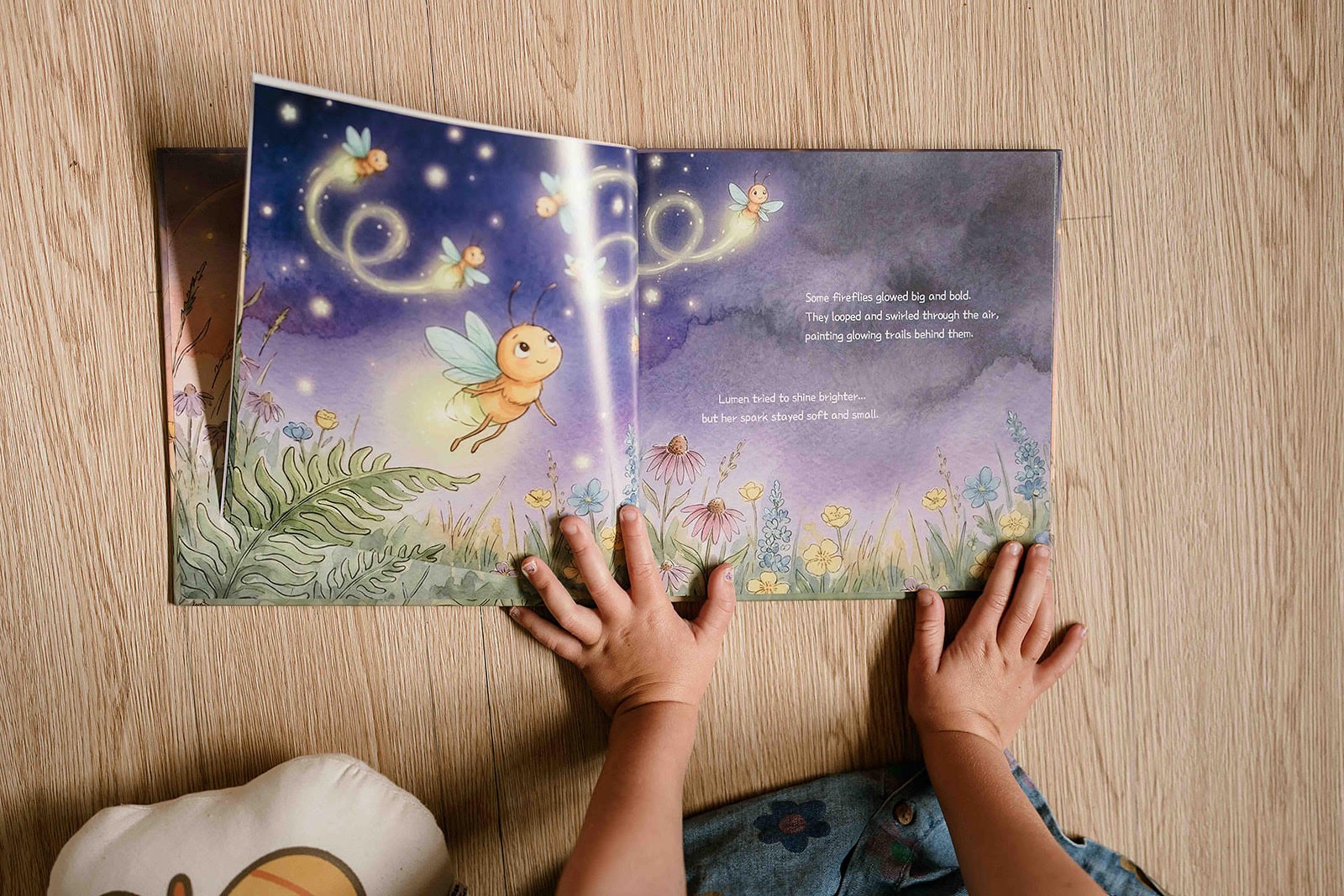
Sometimes it is part of the story. A family may want a book about an EEG, changes during treatment, or a sibling's diagnosis. The story might tell it directly or through metaphor. A hospital room can become a space station. A hard day can become a storm a small firefly learns to move through.
Some families choose metaphor for a hard experience. Others prefer plain and direct language. The right approach is the one that fits the child and the story the family wants to tell.
The details are what make it feel true
A generic wheelchair, hearing aid, port, brace, scar, communication device, or sensory routine may not feel like the child's own. The color of a brace matters. So does where the tubing sits, the words the family uses, the way a sibling helps, or the stuffed animal that always comes to an appointment.
Specificity matters even when a detail cannot be seen in an illustration. A sensory routine, feeding tube, insulin pump, or the way a child communicates may still shape what feels true.
Those details should come from the child and family. A photograph can help with appearance, but it cannot tell us how a child moves, communicates, or experiences the world.
Use the words the family uses
Families describe disability and identity in different ways. The words that feel right to one person may not feel right to another.
When a family creates a Wallace Story, they tell us the language they want us to use, and we carry it through the book. If you are creating a story for someone else, it helps to ask the family first.
Keep the child's details consistent from page to page
If a child uses a wheelchair, hearing aid, brace, port, or communication device, that detail should stay with them as the setting and story change. The same is true for how they communicate.
A wheelchair should be shown as part of how the child moves through the world, not as a symbol of confinement or something separate from them.
These details do not need to be the focus of every page. They are simply part of the child's everyday life, and the story should treat them that way.
When medical experiences are part of the story
An EEG, treatment, hospital stay, or another medical experience can be part of a child's story without becoming the whole story.
A family may want to describe the experience directly, tell it through imagination, or simply include familiar details as part of the child's world. The family provides the details and decides what the story should hold. When accuracy about a real procedure matters, those details should come from the family and care team.
Your family decides what the story is about
Some families want an ordinary adventure that finally looks like their child. Others want a story that helps a child understand something hard happening right now. Many families want both, in different books and at different times.
Disabled voices should lead broader conversations about disability. For a story about one child, that child and family are the authority on the details that make it theirs.
You can come to Wallace with a detailed plot and a clear vision. Or you can use our leading questions and story ideas to help shape it. The people, family history, medical details, memories, metaphors, and meaning come from you.
Sources and methodology
Wallace Stories created this guide from our work building family-directed stories, conversations that shaped our understanding of what families are looking for, disabled-led writing on representation, child life guidance for medical preparation, and public children’s-book data. The sources below support the principles used throughout the guide.
- CDC, Developmental Disability Basics
- University of Wisconsin-Madison, 2024 CCBC Diversity Statistics summary
- FWD-Doc, Framework for Evaluating Disability Representation in Film & Media
- Disability Visibility Project, We Move Together
- Autistic Self Advocacy Network, Identity-First Language
- National Association of the Deaf, Community and Culture FAQ
- Association of Child Life Professionals, Preparing Children and Adolescents for Medical Procedures
- Cooperative Children’s Book Center, Diversity Statistics